
A sudden foot or ankle injury can quickly interrupt your favourite sport or daily exercise routine. One wrong move and your entire week is shot to hell. If you have a foot and ankle sports injury in Plymouth the best thing you can do is get it checked out fast.
Most athletic setbacks actually happen when you are just tired. As you get tired toward the end of a match, your form starts to get really sloppy. That is usually the point when you fall weirdly on the grass and hear a horrible popping sound.
Ankle sprains are definitely the #1 cause of people limping off the field. It occurs when your foot twists inward with force, pulling the ligaments beyond their limits. These tough bands of tissue are like rubber bands and they really don't like to be stretched too far.
If you feel a sharp tweak, you really should stop playing. You walk it off. An old sports myth that generally only results in a lot more internal bleeding. “Get on the bench, take off your shoe and put some ice on that spot right away.
For the first 24 hours after a bad twist, ice is pretty much your best friend. It pushes down hard on your blood vessels so the joint can't blow up like a balloon. Never put ice directly on your skin; wrap it in a thin towel.
You finally make it home and rest your leg on a couch cushion. Your toes are above your heart so gravity can help drain that excess fluid away. Getting professional advice for a foot and ankle sports injury in Plymouth means you are elevating and resting it correctly.
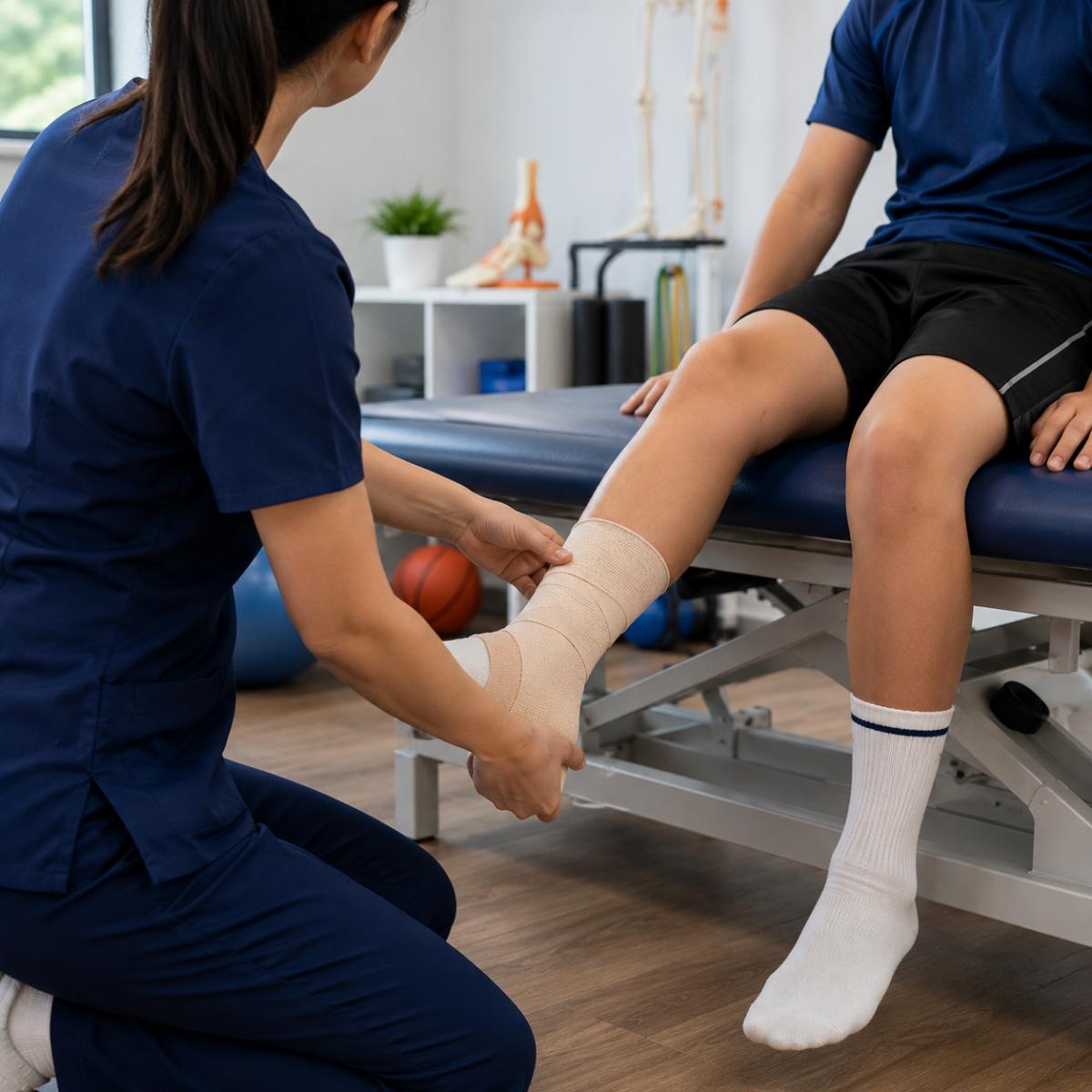
Another simple way to support the sore joint is by using an elastic bandage. Just be careful not to wrap it so tight that you cut off your blood flow completely. If your toes begin to tingle or turn blue, you most certainly need to loosen the wrap immediately.
.
Many active people are afraid to see the doctor for fear of bad news. They think if they can still put some weight on it, nothing is actually broken. But tiny hairline fractures can always disguise themselves as simple sprains, completely fooling you.
The only way to know what went on inside is with a quick set of x-rays. It removes all the dangerous guesswork from your recovery time line. You really don’t want to be walking around on a cracked bone. You don’t want to make the damage much worse over time.”
If you want to turn a little tweak into a major, season-ending surgery, keep playing through the sharp pain. Your body is giving you those intense pain signals for a very specific reason. Ignoring those natural alarms only guaranties you’ll be out of commission for months, instead of just a few weeks.
Sometimes a doctor will put you in a heavy walking boot to make you rest. It is super annoying to wear but it keeps the joint from moving so the torn tissues can heal. A foot and ankle sports injury in Plymouth often means accepting the clunky boot.
When you get the ok to take the boot off, your leg will feel really weak. It may even wobble a bit when you try to stand on one leg. That's because your muscles literally fall asleep when you don't use them for a month.
This is where physical therapy is a complete game changer for your athletic future. Your therapist will give you specific resistance exercises to wake up those lazy muscles again. If you skip this step, you are guaranteed to just sprain it again next month.
Balance training is a huge part of the physical rehab process that people always seem to miss. After major trauma your brain just forgets how to stabilize that particular joint, making you very clumsy. You're on a squishy foam pad and your nervous system has to figure things out and adapt again.
So tell me about the sneakers you’re wearing to the gym right now. They are no longer protecting you if the foam padding on the bottom is totally flattened out. Every time you move your battered foot, nasty shockwaves rattle your legs, jarring your bones.
When you finally get back out on the field, a proper warm-up is absolutely mandatory. Cold muscles are very tight and will snap like an old rubber band when suddenly stressed. Five minutes of stretching and jogging will get the blood flowing so that your joints are ready for explosive movements.
Conclusion
Getting hurt when you're doing something you love is always going to be unbelievably frustrating. But if you’re serious about the rehab process and allow your body to heal, you will definitely bounce back. Follow the experts and wear good shoes and you can safely get back to your active lifestyle.







Leave a comment